Showing posts with label plants. Show all posts

Sunday, May 1, 2011

What kind of tea is sweet tea usually made of?


Search
: sweet tea

Why: We are making sweet tea vodka. I have a lot of tea - mostly green, a little black, some not really "tea" at all. Did you know that black, oolong, green, and white teas are all made from the same Camellia sinensis plant? It's true! The leaves and buds are just grown, harvested, or processed differently.

Answer: Black tea! True facts:
  • The oldest known recipe for sweet iced tea - published in an 1879 community cookbook called Housekeeping in Old Virginia by Texan Marion Cabell Tyree - called for green tea.
  • Most early sweet tea was made of green tea.
  • During WWII, the U.S. was cut off from the major sources of green tea (Asian places), so we only had the tea that came from British-controlled India, which was all black.
  • Since WWII, Americans have been drinking mostly black tea as iced tea.
Source: Wikipedia

The More You Know: The custom of drinking tea and having that whole snack/mealtime in the British Empire originated when Catherine of Bragança married Charles II in 1661. She brought the practice of drinking tea in the afternoon with her from Portugal.

Anyway, we ended up just using some Irish Breakfast to make our sweet tea vodka. I mean, Irish breakfast indeed!

Thursday, April 14, 2011

What's a Flip Flap?


Search
: flip flap

Why: This was one person's answer to a survey question:
2. do you have pets or plants, details please? if not, do you want pets or plants?
2 cats and a Flip Flap.
Answer: A solar-powered Japanese toy plant thing! They really have thought of everything. Check out what these bad boys can do!
Source: YouTube

The More You Know: But wait, that's not all!
Actually, I guess it does more than a real plant. I want one.

Friday, April 8, 2011

I want to see the Celtic tree calendar


Search
: celt tree calendar

Why: On "10 Things You Probably Didn't Know About Harry Potter" on Mental_Floss:
7. Harry, Ron and Hermione all have wand cores based on their birthdays: the Celt assigned trees to people based on that kind of like we assign gemstones today. She had already assigned Harry’s holly-based wand when she discovered the Celt tree calendar and found that she had accidentally assigned him the “right” type of wood.
The what!

Answer: Well here's one, but it doesn't help much because I don't know where my birthday fell on the lunar calendar...

so now I've also Googled "when was i born lunar," and here's a handy finder. It says:
Which I guess is closest to this one:
THE BALSAMIC MOON or WANING CRESCENT MOON (316d-359d) represents the end of the karmic round. The mature plant is ready to let its seeds blow in the winds until they find a spot where they can grow on their own. In an existence marked by this phase, the individual is concerned with wrapping up old projects and loose ends. A powerful desire to rectify the misdeeds of the past can lead to preoccupation with memories of bygone days. Such reminisces may be an unhealthy obsession, or they may enrich the soul with the essence of garnered experience. At the same time, one may look wistfully toward the future in anticipation of a new karmic cycle and a new purpose to be undertaken under the coming new Moon.
I don't know what that's supposed to mean, but it does say this at the top:
See if your intuition and the way you view your life and self matches!
OK, sure, yeah, I guess I remember a lot of things.

And now back to the trees.

...Oh - this is embarrassing - I just realized that if I scrolled down a little further on the Tree page, I would have just found this.
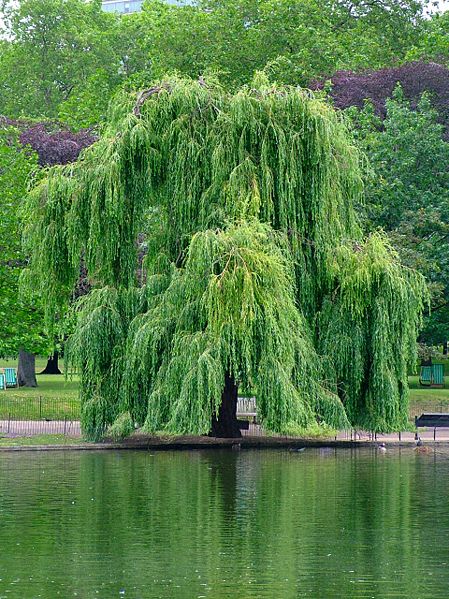
Saille - Willow

Month: February
Color: listed only as bright
Class: Peasant
Letter: S
Meaning: Gaining balance in your life
Peasant! It also says:
Nicknames: The Witches' Moon; Moon of Balance
Magickal Properties:
Romantic Love; Healing; Protection; Fertility; Magick for Women
How nice.

Although this other site says I'm a Rowan tree, so who knows:
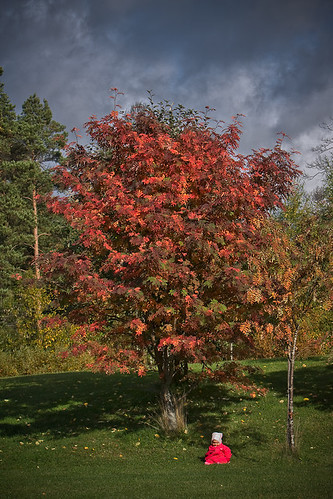
Rowan - The Thinker
January 21-February 17

Celtic tree astrology recognizes Rowan signs as the philosophical minds within the zodiac. If you were born under the Rowan energy, you are likely a keen-minded visionary, with high ideals. Your thoughts are original and creative, so much so, that other’s often misunderstand from where you are coming. This sometimes makes you aloof when interacting with others as you feel they wouldn’t understand where you are coming from anyway. Nevertheless, although you may appear to have a cool exterior, you are burning within from your passionate ideals. This inner passion provides inner motivation for you as you make your way through life. You have a natural ability to transform situations and people around you by your mere presence. You are highly influential in a quiet way and others look to you for your unique perspectives. Rowan pairs well with Ivy and Hawthorn signs.
So I don't know what to think.
Source: Joelle's Sacred Grove, Astro Dream Advisor, the Navy?, Druidry.org, Celtic Tree Astrology

The More You Know: Wait, "balsamic moon"? That's just what it's called. Balsam is an "aromatic resin used for healing wounds and soothing pains." The Waning Gibbous Moon is also called "Disseminating."

Monday, April 4, 2011

What is an oast house?


Search
: oast house

Why: On Farmville (I play it!), you can buy one for your farm in the English countryside. It looks like a teepee, and also what the hell is it and why does it sound so Canadian.
Answer: It has to do with beer-making! An oast is a kiln that is used to dry hops. This is what the inside of that thing looks like:
Brimstone! It's another name for sulfur.

And here's a real one:
Source: The Free Dictionary

The More You Know: Are you now thinking about hops and where hops grow and what hops look like and other things like that? You can read all about them right here.

Wednesday, March 16, 2011

What spices are sweet?


Search
: sweet spices

Why: I am about to drink my 4th cup of tea today (Podrea; thanks Hillary!). Though I don't usually sweeten tea, it is starting to taste a bit monotonous (monoflavorous?). Sugar is bad for you, and honey - while "natural" and "better for you - has a great deal of calories. The only other thing I see in the spice rack is cinnamon.

Answer: There aren't many! A few herbs are sweetish, but not really the sort of thing you want to put in tea. Here are some options:
  • Allspice - Sweet spice of Caribbean origin with a flavor suggesting a blend of cinnamon, cloves, and nutmeg. May be purchased ground or as whole dried berries, which can be bruised to release more flavor.
  • Basil - Sweet, warm flavor with an aromatic odor, used whole or ground.
  • Chives - Mild, sweet herb related to the onion.
  • Cinnamon - Popular sweet, aromatic spice that comes from the bark of laurel trees (WHAT!). It is sold ground or in sticks and used to flavor baked goods.
  • Cloves - Rich East African spice used to provide flavor to both sweet and savory recipes, from baked goods to pickling brines.
  • Nutmeg - Popular baking spice that is the hard pit of the fruit of the nutmeg tree.
  • Pumpkin Pie Spice - A blend of cinnamon, ginger, allspice, nutmeg, and cloves used for pumpkin pie, gingerbread, cookies, sweet potatoes, and applesauce. (Is this a real thing?)
  • Tarragon - Fragrant, sweet herb used fresh or dried to season vegetables, salads, light meats, seafood, and eggs.

S
ource: Herbs, Spices, and Seasonings

The More You Know: Also maybe some sort of mint - like peppermint, which is a hybrid between spearmint and watermint.

Thursday, January 27, 2011

What's a lichen?


Search
: lichen

Why: In The Graveyard Book by Neil Gaiman:
One grave in every graveyard belongs to the ghouls. Wander any graveyard long enough and you will find it - waterstained and bulging, with cracked or broken stone, scraggly grass or rank weeds about it, and a feeling, when you reach it, of abandonment. It may be colder than the other gravestones, too, and the name of the stone is all too often impossible to read. If there is a statue on the grave it will be headless or so scabbed with fungus and lichens as to look like a fungus itself. If one grave in a graveyard looks like a target for petty vandals, that is the ghoul-gate. If the grave makes you want to be somewhere else, that is the ghoul-gate.
I have seen that word before, but never heard it said out loud until today. (I am listening to the audiobook.) He pronounced it to rhyme with "bitchins."

Answer
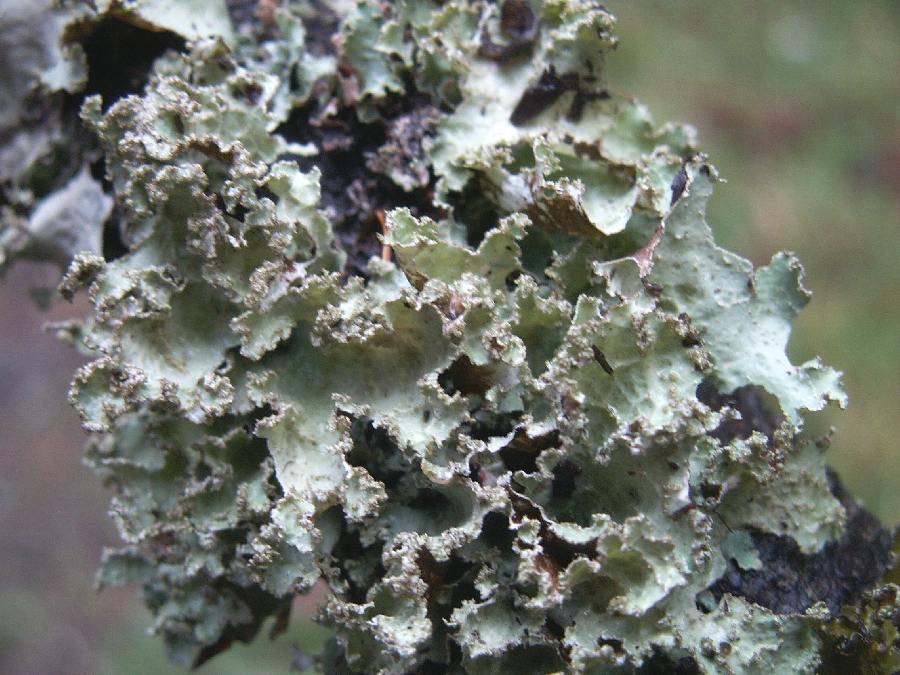
: A symbiosis composed of two organisms: a fungus (the "mycobiont") and an algae and/or a cyanobacteria (the "photobiont")! While the fungus is sometimes viewed as a parasite in this relationship, in most cases, neither the fungus nor the algae can survive alone in the habitat occupied by the lichen. There are between 13,500 and 17,000 species of these bad boys around the world, and many are used to produce dyes, antibiotics, and even food. Yum!
Source: Earthlife.net

The More You Know: The word can apparently be pronounced two ways, bothˈlɪtʃən (rhymes with "bitchin") and ˈlaɪkən, like lycan, like the werewolves in Underworld: Evolution, which I happen to own (due to carelessness with my Columbia House account - which is also why I own such films as Fun with Dick and Jane and Ghost Rider). In Greek, lýkos means "wolf," which is where that comes from, but leichen means "what eats around itself" and probably comes from leichein, "to lick." Yum again!


Saturday, November 13, 2010

I want to see how Brussels sprouts grow


Search
: brussels sprouts

Why: A conversation:
CHANDLER: You know what we need to invent?
ME: What?
CHANDLER: Well, you know how Brussels sprouts grow?
ME: No.
CHANDLER: Well, it's kind of like corn. Like a stalk. They grow around. I don't really know how to describe it.
What.

Answer
: Ooohhhh:
I guess I always assumed they grew out of the ground like little cabbages.

Source
: Google Images

The More You Know: Brussels sprouts happen to be among my favorite vegetables, right up there with spinach and, I dunno, baby carrots.
Forerunners to modern Brussels sprouts were likely cultivated in ancient Rome. Brussels sprouts as we now know them were grown possibly as early as the 13th century in what is now Belgium. The first written reference dates to 1587.
Also, I'm not telling you what we're inventing, but it's a really good idea. Look for it in stores in 2011!

Tuesday, October 12, 2010

Where does loofah come from?


Search
: loufa; loofa; loofah

Why: I am editing an article about making your own spa, and the girl spelled loofah like "loufa." I think it comes out of the sea.

Answer: Well first, it's actually luffa. And second, get ready to have your mind blown: it's a plant that grows on a vine! WHAT! Cultivated in India and the Middle East, the fruit is a cucurbit, related to gourds, melons and cucumbers. You can also eat it, and you may have seen it on a menu listed as Chinese okra. Well, I never.

When mature, the fruit becomes a "tough mass of cellulose fibers." Use it whole or cut it up or put it in soap or put it on a stick or use it to wash your dishes. Anything goes!
Source: WiseGeek, Wikipedia, Luffa.info

The More You Know: When we first moved to Boston, Amy told me and Klepdog that she was glad neither of us filled up the bathtub with girly shit like loofahs and shower gel. The truth is that now I have a poufy sponge thing and some pomegranate body wash with moisturizing microbeads. I use it to scrub.

Tuesday, September 14, 2010

Where did the dodo bird get its name?


Search
: dodo bird name

Why: Mummy and Daddy got me this lovely octopus charm from the Dodo collection by Pomellato, named after their first charm (over on the left there):
*The "D." is for diamond.

Answer
: It's up for debate!
  • It may be related to the Dutch word dodaars ("knot-ass"), a water bird known in English as the Little Grebe or Dabchick. Those birds have similar feathers on the hind end and are clumsy walkers, like dodos.
  • It may be an onomatopoeic approximation of the bird's call, a two-note pigeony sound like "doo-doo" (lol).

The word "dodo" (as in, "Idiot! Don't you know it's day?!") has been around longer than the bird.

"Dodo" has been part of the English language since at least 1628, and the Dutch are not thought to have reached Mauritius before 1638. "Dodo" comes from Portuguese doudo (more commonly doido) meaning "fool," or, as an adjective, "crazy." The Portuguese word may itself be a loanword from Old English (cp. English "dolt").
Whatever. That thing was over 3 feet tall and weighed like 45 lbs.
Source: New World Encyclopedia, Wikipedia

The More You Know
: It was believed that the loss of the dodo bird directly caused the near extinction of the tambalacocque, or dodo tree (there are only 13 left, all over 300 years old). One botanist theorized that the dodo tree's seeds would only germinate after passing through the digestive system of the dodo. To help with the tree's survival, he force fed tambalacocque seeds to 17 turkeys. The results were unclear.

Now, scientists think the decline of the tree may be due to competition with introduced plants and because they're getting eaten by introduced pigs and crab-eating Macaques - who I happened to be reading about just yesterday because the boy monkeys groom the girl monkeys in exchange for sex.

Thursday, July 8, 2010

What is myrrh?


Search
: myrrh

Why
: On "Permission Slip" on 27bslash6:
I was actually in a Bible based play once and played the role of 'Annoyed about having to do this.' My scene involved offering a potplant, as nobody knew what Myrrh was, to a plastic baby Jesus then standing between 'I forgot my costume so am wearing the teachers poncho' and 'I don't feel very well'.
Answer: Dried tree sap! The most common sources are species of Balsamodendron and Commiphora trees, particularly the Commiphora myrrha, doy, which is native to Somalia and eastern Ethiopia. Mashed up, it is a reddy-brown resin. It has historically been used in perfumes and salves and as an additive to wine.
The name myrrh comes from murr or מר or mar or maror, which my fellow Chosen People will recognize as the Hebrew word for "bitter."

Source
: WiseGeek

The More You Know: But why did those guys give it to the sweet baby Jesus?
Myrrh was a symbolically appropriate gift for the baby Jesus because it was used in embalming at the time. Therefore, while gold and frankincense symbolize the infant's royalty and divinity, respectively, myrrh makes reference to His future death.
Frankincense, PS, is also dried tree sap. It is collected from the Boswellia Thurifera of Somalia, Oman, and Yemen.

Wednesday, June 23, 2010

What is wasabi?


Search
: wasabi

Why
: You can grow it on Farmville! It looks like this! (in the middle; the other stuff is bamboo; I was going for a theme):
I thought it was just the name of a condiment, like mayonnaise.

Answer: It's a root vegetable! It is grated into a powder and mixed with water to make a paste. Don't eat it!
Source: Japan-Guide.com

The More You Know
: Speaking of things I don't eat, some theories about the origin of mayonnaise:
  • In 1459, a London woman named Annamarie Turcauht stumbled upon this condiment after trying to create a custard of some sort.
  • The name comes from the popular corruption of moyeunaise, derived from the very old French word moyeu, "yolk of egg."
  • The sauce may have been christened mayennaise after Charles de Lorraine, duke of Mayenne, because he finished his meal of chicken with cold sauce before being defeated in the Battle of Arques in 1589.
  • French chef and author Marie Antonie Careme (1784-1833) proclaimed that mayonnaise was derived from the word magnonaise (magner means "made by hand" or "stir").
  • The recipe was brought back to France from the town of Mahon in Menorca (Spain), after a victory over the British at the city's port in 1756. The sauce was originally known as salsa mahonesa in Spanish (maonesa in Catalan, as it is still known on Menorca), later becoming mayonnaise as it was popularized by the French.
  • The French cities Bayonne and Les Mayons also claim to be the birthplace[s] of mayonnaise. It is thought that "mayonnaise" could be a corruption of "bayonnaise" sauce. Today, bayonnaise is mayonnaise flavored with Espelette chiles.

Tuesday, June 8, 2010

What is a lilikoi?


Search
: lillikoi; lilikoi

Why
: In the song "Boy Lilikoi" on his solo album Go, Jónsi (the fellow from Sigur Ros, jicydak) says:
I want to be a lilikoi, Boy Lilikoi
You grind your claws, you howl, you growl unafraid of hoi polloi
You run, you're free, you climb endless trees - you reignite
You growl, you howl, you show your teeth
You bite, it's alright
It's real nice. Feast your ears:
Answer: A kind of yellow passion fruit! Lilikoi is its Hawaiian name, and it grows throughout the Pacific Islands and Central and South America. In fact!, it grows so well in some places that it is a bit of a pest! It looks like this:
Source: Tradewinds Fruit

The More You Know
: Do you know what a passion flower looks like? Dangerous, is what:

Sunday, May 9, 2010

I want to see a picture of a peanut plant


Search
: peanut plant

Why: On Farmville, peanuts look like this:
Answer: WHAT!
Source: Google Images

The More You Know
: Peanuts are known by many local names, including earthnuts, ground nuts, goober peas, monkey nuts, pygmy nuts, and pig nuts. They are also the carnation of the snack world and ruin regular cans of "mixed nuts." Get the Selects, y'all.

Tuesday, April 27, 2010

Where do hops grow?


Search
: where do hops grow; humulus

Why
: I went to the Ghost River Brewing company the other day (I've been out of town!), and the guy said - among other things - that hops are what adds flavor to the beer, that there are more varieties of hops than there are of grapes, and ... I can't remember. They feed their beer waste to cows. Anyway, if all beer needs hops, are there farmers who just grow hops? Where does it grow naturally? Because people make beer all over the world.

Answer: All over! It is native to native to temperate regions of the Northern Hemisphere. On this list, there are varieties that grow in America, Czech Republic, England, France, Germany, New Zealand, Poland, and Slovenia. There is a Japanese hop, but it is used for ornamentation.

In America, there are hops farms and breeding programs in Oregon and Washington. One English variety is called the Fuggle.

These are in Belgium:

Source: Wikipedia

The More You Know
: The hop is part of the family Cannabaceae, which also includes the genus Cannabis, which is I think you know what. Like that thing, only the female flowers are used.

Also, we tried the Saranac Summer Brew the other day and it was pretty good. It's real sweet, like honey in a cup. Get your paws on it.

Friday, April 2, 2010

Where did the manila folder get its name?


Search
: manila folder

Why: I'm filing important documents. I'm aware of Manila, Philippines, and my Nilla Wafers, but no manila paper.

Answer: A type of fiber! Manila hemp comes from abaca, a relative of the banana plant. It is - doy - native to the Philippines and was first introduced to the West in the 1800s.
Until synthetic alternatives were invented, abaca was the primary material used to make marine ropes because of its strength, water-resistance, and light weight. Those qualities also make it ideal for durable paper products like currency notes, tea bags, vacuum bags, and office folders.
Source: Ask Yahoo!

The More You Know: The Philippines has an estimated population of about 92 million people, making it the world's 12th most populous country. It is estimated that there are an additional 11 million overseas Filipinos worldwide. Maybe you know one! Maybe she has the same birthday as me!

Sunday, January 24, 2010

What do sesame seeds grow?


Search
: sesame seed

Why: Yesterday I ate one of the sesame nuggets in Snack 'Ens, and today, Lori got the cheeseburger Vinylmation thing with a sesame seed bun head. I do not like sesame seeds.
Answer: Sesame! Doy! But it is pretty much only grown for its seeds. It was first domesticated in India, and now it is prevalent in tropical regions of Africa
Source: Wikipedia, WHFoods

The More You Know: Sesame seeds are thought to be the world's oldest condiment, dating back to at least 1600 B.C. In Arabian Nights, Ali Baba's magic words "Open, Sesame" ("Open, Simsim" in Arabic) reflect the way the seed pods burst open at maturity.